

WMO Regional Director Tours MSD Operations
Harare, Zimbabwe, Dr. Agnes Lawrence Kijazi, Director of the World Meteorological Organization Regional Office for Africa (WMO), toured the Meteorological Services Department of Zimbabwe last week to review how weather and climate services operate on the ground.
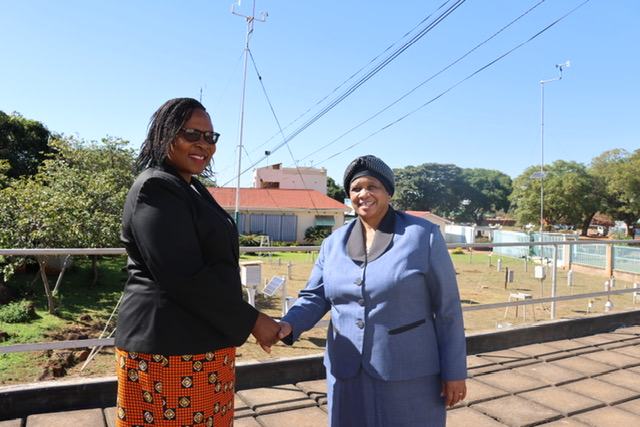
During her tour she was accompanied by Mrs. R. Manzou, Director of Meteorological Services Department of Zimbabwe. At each section, the work was explained by the forecasters, data officers, and technicians who manage the department’s daily operations.
Dr. Kijazi’s visit focused on tracing how observations move through the system to become forecasts, warnings, and climate records.
Inside the Central Forecast Office
Dr. Kijazi began in the Central Forecast Office, where meteorologists combine satellite imagery, global models, and local observations to produce daily forecasts and severe weather alerts. The team outlined the procedures for issuing flash flood warnings and described how alerts are disseminated to civil protection units and broadcast partners.
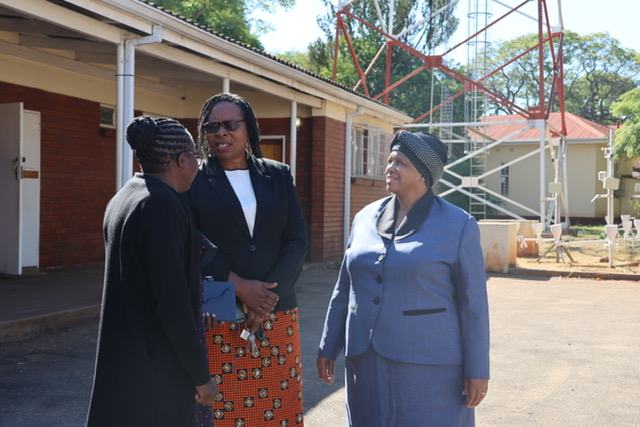
The staff also explained how local knowledge is integrated with numerical model output to improve forecast accuracy in a region where rainfall patterns can shift quickly.
Reviewing the Database Unit
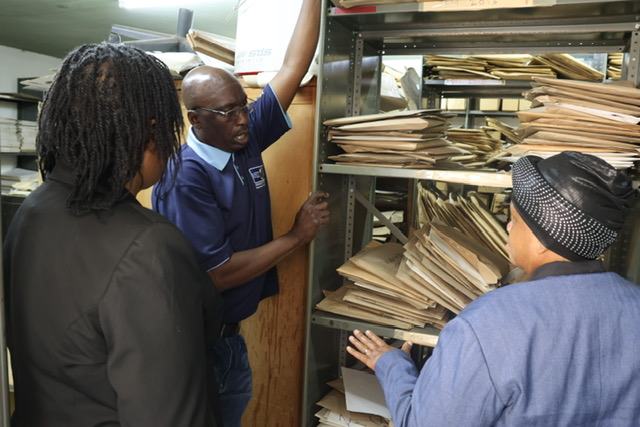
The tour continued to the Database Unit, which manages decades of rainfall, temperature, and pressure records. Staff described the ongoing process of rescuing data from paper ledgers, digitizing the records, and applying quality control checks before submission to regional and global databases.
Observing Engineering and Instrument Operations
In the Engineering Section, technicians demonstrated the maintenance of the department’s network of automated weather stations, radars, and communications links. The team outlined field repair procedures, calibration schedules, and the in-house training program used to develop technical capacity.
Dr. Kijazi then visited the department’s instrument site, where technicians showed the setup and calibration of temperature sensors, rain gauges, and wind instruments. The staff explained how site exposure, leveling, and metadata management are maintained to meet WMO observational standards and ensure data quality from the point of measurement.
Closing the Tour
The visit concluded with a review of how forecasting and climate services depend on coordinated work across the forecast office, database unit, engineering section, and instrument site. It is this chain of operations that determines whether warnings reach communities in time when weather systems develop.