
Zimbabwe Launches Early Warnings for All Initiative, Putting Early Action at the Heart of Disaster Risk Management
Mutare; Zimbabwe 20 August 2026
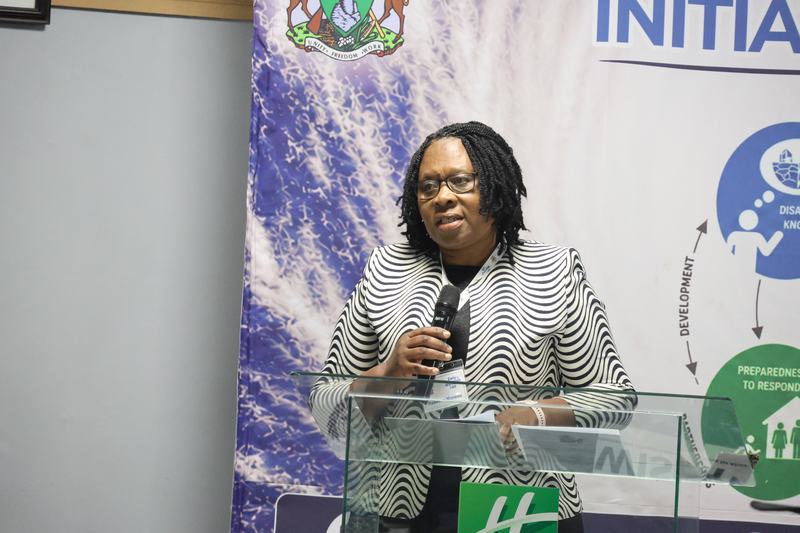
When dark clouds gather over a community, the question is not simply whether rain is coming. The real question is whether people have enough time, information and support to act. Can a farmer move livestock before floodwaters arrive? Can a school change its plans ahead of severe weather? Can families move to safer ground before a river bursts its banks? These questions were at the heart of Zimbabwe’s national launch of the Early Warnings for All (EW4All) initiative in Mutare on 20 August 2026.
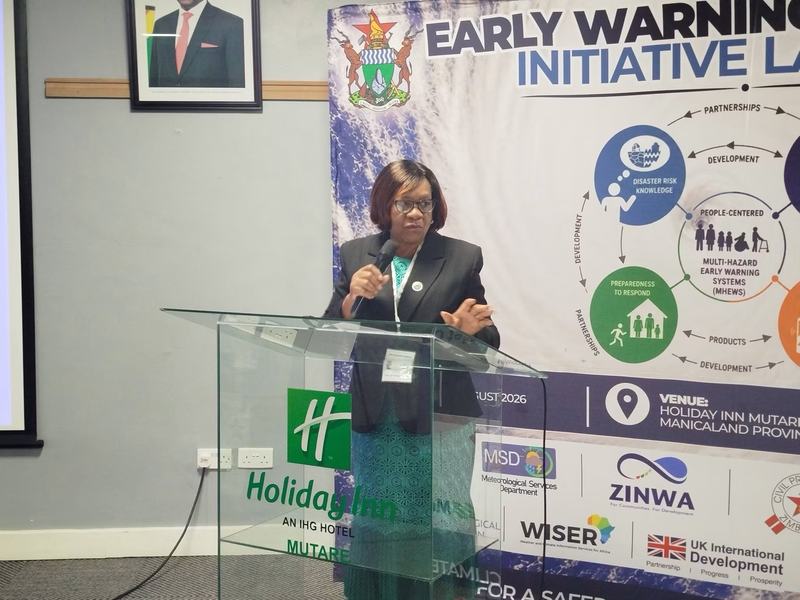
Hosted by Ministry of Environment Climate and Wildlife through Meteorological Services Department (MSD), the launch marks an important step in strengthening Zimbabwe’s approach to disaster risk management, moving beyond simply forecasting hazards towards anticipating their impacts and taking action before disasters strike.
Launched globally by United Nations Secretary-General António Guterres in 2022, EW4All seeks to ensure that everyone, everywhere is protected by life-saving early warning systems by the end of 2027. The initiative is built around four interconnected pillars: disaster risk knowledge; detection, observation, monitoring, analysis and forecasting; warning dissemination and communication; and preparedness and response capabilities.
For Zimbabwe, where communities face floods, droughts, severe thunderstorms, tropical cyclones and other hazards, the value of a warning ultimately depends on what happens after it is issued. The critical questions are no longer simply what will the weather do? but also who will be affected, what impacts are likely, and what can be done now?
This is where anticipatory action becomes critical. Zimbabwe has been strengthening this approach through initiatives such as Action-Based Forecasting, which seeks to connect forecasts with predefined actions, institutional responsibilities and impact thresholds. The principle is simple: a forecast reaches its full value when it enables action.
But effective early warning cannot be delivered by one institution alone. It requires a partnership that brings together national institutions, technical agencies, development partners, humanitarian organisations and communities. Zimbabwe’s National Action Plan brings together institutions including Meteorological Services Department, Department of Civil Protection, Zimbabwe National Water Authority (ZINWA), Postal and Telecommunications Regulatory Authority of Zimbabwe (POTRAZ) and Zimbabwe Red Cross Society, alongside development and humanitarian partners including the United Kingdom development partnership and World Food Programme.
Each partner brings a different piece of the early warning chain. MSD provides authoritative meteorological monitoring, forecasting and weather information, while Civil Protection provides the disaster risk management and preparedness architecture needed to translate warnings into coordinated action. ZINWA contributes expertise on water resources and hydrological risks, while POTRAZ is important to the communication infrastructure through which warnings can reach people.
The Zimbabwe Red Cross Society adds a vital community dimension, supporting preparedness, engagement and anticipatory action at the local level. Development and humanitarian partners further contribute technical expertise, resources and capacity to strengthen national resilience. This is the partnership spirit at the heart of EW4All bringing institutions and capabilities together so that information can move from observation, to forecast, to warning, and ultimately to action.
Yet the success of an early warning system is not measured by the sophistication of its technology alone. It is measured by what happens when a warning reaches someone at risk. Can they understand it? Do they trust it? Do they know what to do? And do they have the means to act?
This makes last-mile communication one of the most important elements of EW4All. Warnings must move beyond technical bulletins and institutional platforms and reach farmers, families, schools, businesses and communities through channels they can access and understand. Language, trust and local context matter, while community knowledge can complement scientific forecasting.
Young people, women, persons with disabilities, traditional leaders and community organisations must therefore be part of the early warning architecture not simply recipients of information. A genuinely people-centred system does not merely warn communities about risk; it empowers them to manage it.
The most successful early warning stories are often the ones that never become disasters: the farmer who moves cattle before the flood, the family that evacuates in time, the school that postpones an activity, or the local authority that clears drainage channels before heavy rainfall. These actions may appear small, but collectively they can prevent lives, livelihoods and infrastructure from being lost.
For Zimbabwe, strengthening early warning is therefore an investment in prevention and resilience. It can help protect food security, livelihoods, infrastructure, water resources and hard-won development gains.
The ambition of EW4All is ultimately straightforward: no one should be left without a warning, and no warning should be issued without a pathway to action; because the real test of an early warning system does not come when the forecast is produced. It comes when the storm arrives. If people have received the warning, understood the risk, trusted the information and acted in time, then the system has done what it was designed to do.
Early warning is not the end of the process. It is the beginning of early action.